
Capacity: how long
We distinguish nominal capacity from usable kWh, night-time consumption, future degradation and whether your solar can replenish it.
A good battery quote starts with how much energy your house needs after sunset, how much solar can recharge the battery, and exactly what you expect it to power in a blackout.
We explain these separately because each changes the experience and the quote.
We distinguish nominal capacity from usable kWh, night-time consumption, future degradation and whether your solar can replenish it.
A large battery does not necessarily run every appliance at once. Continuous and backup inverter ratings are as important as kWh.
Essential circuits versus whole-house coverage may require different switchboard work, gateways, load management and protective equipment.
DC-coupled storage connects to a compatible hybrid inverter. AC coupling can be a good retrofit path with existing solar.
The answer is more nuanced than a simple yes or no.
Where the current system is compatible, a battery can be added directly to an existing hybrid inverter or through an AC-coupled arrangement. We check firmware, monitoring, switchboard and warranty support.
Best for: suitable existing panels and hardware you want to preserve.
When a legacy inverter or brand mix creates limitations, replacing the inverter can simplify compatibility, monitoring and backup design. We compare this against the cost of retaining the old system.
Best for: older equipment, more solar capacity or a new whole-home strategy.
Some households have a relatively small overnight draw but want headroom for hot summer nights, future family needs or VPP operation. Others mainly want essential circuits during outages.
We regularly compare modular batteries around 16.64, 24.96, 33.28 and 41.6 kWh nominal capacity using GoodWe modules. The correct choice depends on usable capacity and how often you can recharge it.
See the real design examples ↗Full-house and essential-circuit backup are not interchangeable sales phrases.
Common examples are lights, fridge, internet and selected outlets, subject to the installed circuits and inverter output. Higher-demand appliances may need to stay off during an outage.
We verify inverter backup output, simultaneous loads, phase compatibility, gateway or transfer arrangement and any required electrical work. Heavy loads can still exceed inverter limits.
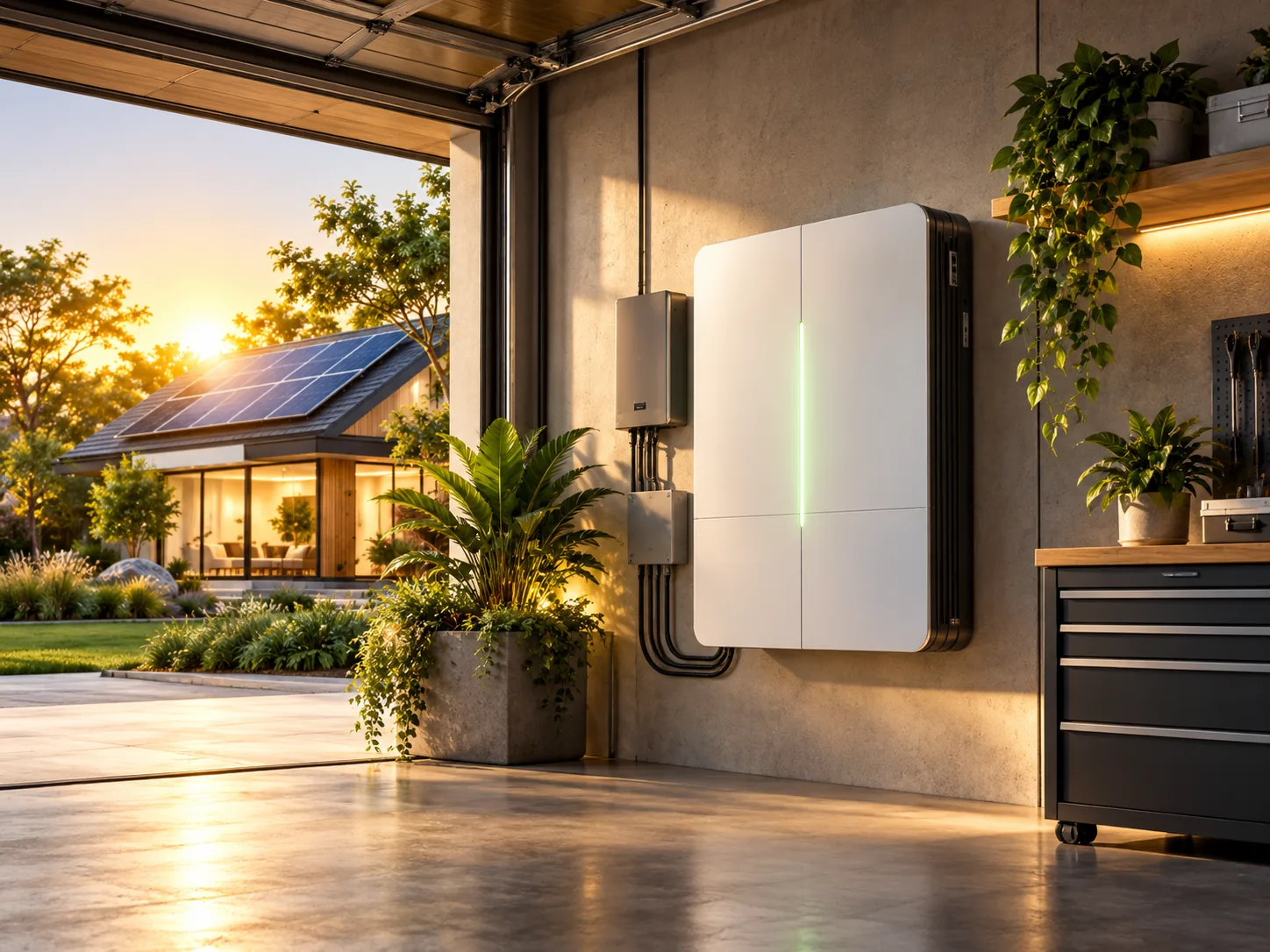
Garage and wall locations, clearance rules, vehicle impacts, protective barriers, switchboard access and installation constraints are discussed before finalising the scope.
Our guide groups GoodWe and Redback as value-focused battery options. Premium options include Sigenergy, Sungrow, BYD, SolarEdge, iStore, Enphase, Tesla Powerwall and Sonnen.
Our preference is usually for proven compatibility, support pathways and lithium iron phosphate chemistry where suited to the design. We compare battery usable capacity, matching inverter, monitoring and backup capability before brands.
Read SunDrop's complete guide ↗In real proposals we have compared almost identical panel arrays and battery capacities using these two brands. GoodWe was often the recommended value choice, while Sigenergy was presented for its integrated architecture and advanced controls.
Neither is automatically right for every home. We compare the installed system and features, not a logo in isolation.
Not necessarily. Check nominal versus usable capacity, reserved backup energy, conversion losses and operating limits. We spell out both figures where the manufacturer provides them.
Recharge depends on generation after household consumption. We consider reduced winter production and the trade-off between battery size and available solar.
Sometimes, but support and firmware compatibility can be more complicated. We check manufacturer compatibility and who owns troubleshooting before recommending a mixed-brand system.
No. Federal and WA programs, VPP participation, eligibility and calculation rules can change. We check current conditions when preparing your quote; we do not advertise a fixed rebate as guaranteed.
Tell us your existing solar equipment, night-time use and blackout priorities. We will compare the sensible storage pathways.